
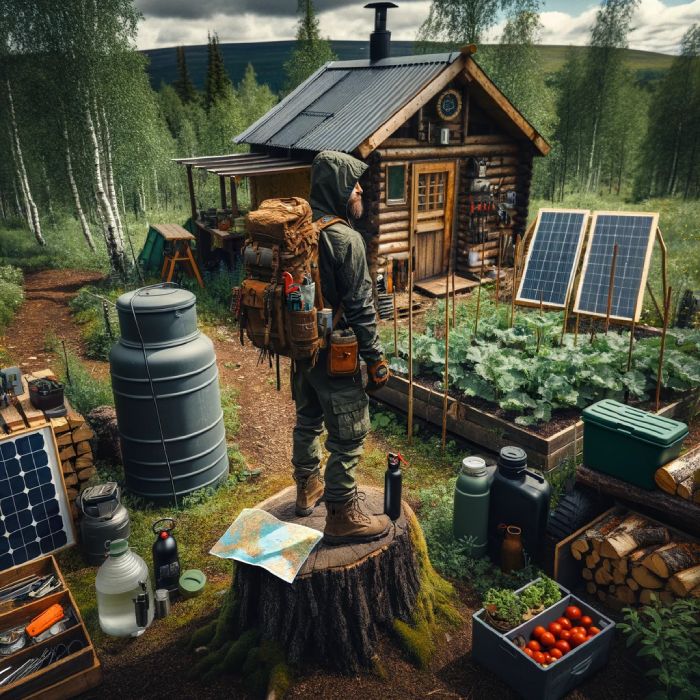
What Is a Prepper and Preparedness
Entering the World of Preppers: More Than Preparation, a Way of Life
Welcome to the fascinating world of preppers, where preparation is interwoven with everyday life, forming a unique and resilient way of living. Far from the stereotype of people preparing for the end of the world, preppers are individuals who seek to be ready for any eventuality, whether it be a natural disaster, an economic crisis, or any other unexpected event of daily life.
The Art of Preparing: Far Beyond the Obvious
Preparing goes beyond stocking up on food and water. It is a continuous process of learning and developing skills and knowledge that set us on the path to self-sufficiency and increase our resilience. From learning basic survival techniques, such as making fire, treating wounds and purifying water, to more complex knowledge such as agriculture or electricity that requires dedication and prolonged study, each step makes us better prepared to face challenges. Preparedness is also a mindset, a state of alertness and readiness, a predisposition to adapt.
Community and Individuality: How to Find the Balance
At the heart of preparedness lies the balance between the individual journey and the collective effort. Individually, each prepper works to develop personal skills and put together a customised survival kit. This kit can include anything from basic first-aid items to more specialised tools, depending on individual needs and the specific risks of the region. In addition, the ability to observe and interpret the environment is crucial.
On the collective side, joining a community of preppers is invaluable. Online groups, forums and local gatherings not only provide a platform for exchanging knowledge and experiences, but also strengthen the bonds of mutual support. In these groups, both newcomers and veterans share tips and techniques and forge friendships. Developing lasting relationships of friendship and trust is vital: in a disaster scenario, having someone with the same ideological alignment whom you trust, who keeps watch while you sleep or helps you when you are sick, is something that must be cultivated while times are good.
The Social Impact of Preparedness
Preparedness has a significant social impact. In crisis situations, prepper communities often emerge as essential points of support, helping not only their members but also the wider community. Far from any stigma, preppers are people who have chosen to be prudent and responsible, preparing not only for their own well-being but also for that of the community around them.
The first steps on a prepper's journey
Starting a prepper's journey initially involves a clear understanding of the specific risks of the place where you live. Whether it is preparing for floods, earthquakes or economic crises, correctly identifying these risks is the first step towards effective preparedness.
Setting a budget is essential. The idea is not to accumulate supplies in a disorderly way, but rather to make strategic and intelligent purchases. Starting with basic items, such as non-perishable food, water, flashlights and batteries, and gradually adding items as needs and budget allow, is an effective method.
Preparedness and Technology: A Powerful Combination
The age of technology has brought new dimensions to preparedness. Mobile phone apps to monitor the weather, learn first aid or identify edible plants are examples of how technology can be an ally. Furthermore, knowledge of emergency communication, such as the use of radios, is vital in scenarios where conventional networks may fail.
Building a Preparedness Plan
Developing a preparedness plan is more than listing supplies. It involves thinking about specific emergency scenarios and devising strategies for each one. Moreover, sustainability is a critical component of modern preparedness. Learning to grow food, manage water resources sustainably and explore alternative energy sources not only makes us more self-sufficient, but also contributes to the health of our planet.
The Prepper Mindset: Prepared, Not Paranoid
Far from being driven by fear or paranoia, most preppers are realistic and practical. Preparing is a way of living with peace of mind and confidence, knowing that we are ready to face challenges. It is equivalent to having life or car insurance: we hope not to have to use it, but it is wise to have it in case of misfortune. This proactive mindset reduces the impact of adversity on our lives and on those of the people around us.
Conclusion: Why preparing pays off
In short, being a prepper is more than a set of practical actions; it is adopting a mindset, a way of seeing the world. Being prepared gives us security and control over our lives, allowing us to face both major catastrophes and minor disruptions with confidence and serenity. The reason we are preppers is to preserve as much normality as possible for ourselves and for the people we love.