
Bug Out Vol.2 “The Emergency Backpack”
When it comes to preparedness and to the possible events that may disrupt our daily routine, there are some distinctions we should make when preparing for something, and they are:
Duration, support / safety network, distance, means of transport.
Stepping out of our comfort zone for 48 hours, staying in a hotel in some nearby town, or in a civil protection shelter, is not the same as heading into the middle of the forest completely cut off from everything and everyone.
As such, we must be rational and practical when building our emergency backpacks.
In this article we will cover building an emergency or evacuation backpack for a period of 48 hours or longer, always based on the following criteria.
Duration: Unforeseen
Support network: Friends, family, Government
Distance: Local
Means of transport: By car or on foot
Equipment List
Assuming there is a support network in place (Civil Protection / Fire Brigade), we will limit the load to items that give us some comfort over 48 hours.
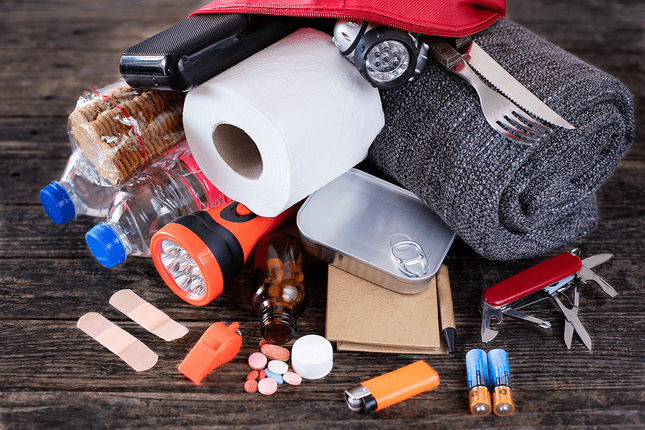
Essential items
- Dynamo (hand-crank) charger
- Cash
- Ready-to-eat food and/or snacks
- Water (bottle or hydration bladder)
- First aid kit or IFAK
- Personal documents (copies) digital or paper
- Suitable footwear (boots preferably)
- Hygiene kit (similar to what you take when travelling)
- Personal medication kit (if you need it)
- Sleeping bag (in case the location is not properly equipped)
- Underwear and flip-flops (you won't want to spend 48 hours in the same socks and footwear)
- Leather gloves and protective goggles (in case you have to get over obstacles)
- Warm clothing (even if the goal is a shelter, it may be needed along the way)
Recommended items
- Headlamp
- Digital money (cards, apps)
- Chargers and power banks for mobile phones
- Power strip (very important, as at shelters there will be dozens of people wanting to charge equipment)
- Headphones for mobile phones (it's important to respect others' space, just as you'll want yours to be respected)
- Whistle (to signal your position if you get lost)
- PMR radio (or better if you are licensed radio amateurs)
- Knife of legal size (it may be confiscated upon entry/registration at a civil protection shelter)
Optional items
- AM/FM radio
- Water purification tablets
- Tarp or plastic sheeting (to build a shelter if you can't move on)
Children
Children should be taught from a young age to carry their own backpack with their own items, and parents should not be the ones carrying them, otherwise the children may become separated from them and be left without their things.
- Blanket
- Stuffed animals
- Colouring books / pencils
- Specific medication
Animals
Animals should be promptly placed inside carriers and evacuated (if it can be done safely; otherwise, leave everything open and their instinct will prevail)
- The animal's medication
- Food bag and travel water bowl
- The animal's documents (they can be placed in an outer pouch attached to the carrier for easy identification)
Final notes
All equipment (backpacks, carriers) should be ready to go at any moment without warning, preferably next to you or easily accessible. In the case of carriers, near the main exit; in the case of emergency backpacks, preferably placed in the bedrooms. This is because situations such as earthquakes that occur at night can catch people off guard, as they are usually in underwear or not dressed, not wearing shoes or wearing inadequate footwear, and some may even wake up disoriented. That way everything they need will be within minimal reach.