
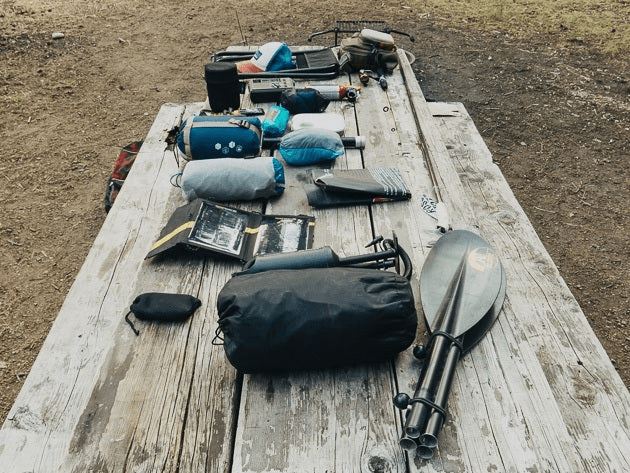
Bug Out Vol.1 “The Camper”
Seeing this title, you must be asking yourself… But what does camping have to do with preparedness?
Well, in a disaster or emergency situation you may find yourself forced to make the conscious decision to leave your comfort zone, by car or on foot, for another location that does not have the living conditions you are used to, and when that happens, the lack of habit can be a problem.
As such, we suggest that everyone who is starting out in preparedness begins in a natural way with activities in which they can include their family and even friends, thus making group preparedness something organic.
So where to start? Well, as the title indicates, we are going to start with camping.
1\. Backpack
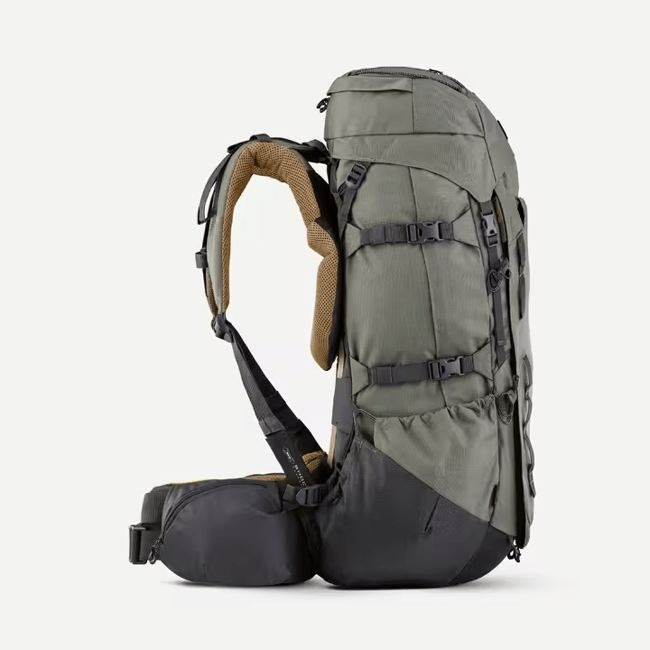
To stay at ease and not run the risk of ending up holding your backpack in your hands halfway through a hike because it tore or the straps broke, we recommend investing in a quality backpack, but be careful.. expensive is not always synonymous with good.
There are several types of backpack on the market and, as such, your choice should be based on the type of bag appropriate for the activity in which you intend to use it; that is also why it is common to have more than one backpack for each situation.
In this specific case, and because we are talking about camping, we recommend trekking backpacks with a Molle system, allowing you to add modules according to your preferences and to the objective, since you can use it both for activities close to your vehicle and for activities in which you intend (or are forced) to walk for hours.
In terms of capacity, since what carries a lot also carries a little, we recommend that you stick to around 60 litres, which is enough to carry the equipment needed for several nights outdoors in fully self-sufficient mode. That way you also do not run as much risk of carrying unnecessary weight, because the bigger the bag, the more we tend to take items that we will never use or that will have little relevance.
2\. Weight
Weight is a very important factor and you should bear in mind that camping close to the vehicle is not the same as spending the night several hours away from the means of transport that took you to the location or that will take you away from it.
Thus, and trying to keep the weight to a minimum, we will go through the list of items that are indispensable, without however overlooking that this chapter is intended for those who want to start out through camping as a way of leaving their comfort zone, whether alone or in a group, leaving some comfort items (marked as optional) to your discretion in order to ease the transition and maximise getting used to unusual situations.
3\. Sleeping or Overnight System
An overnight system is composed of at least 3 layers of insulation.
• The top layer, which in this case is a tent (Always check its condition before leaving and do not forget the pegs)
• The intermediate layer, which is usually the sleeping bag.
• And the bottom layer, which can be an inflatable mattress or a sleeping mat (although we always recommend non-inflatable material for its durability).
These 3 layers are extremely important because they belong to the category at the top of the priorities in a survival situation, thermal regulation, so they should be chosen according to the time of year in which you are going to carry out your activity.
Optionally, in order to increase your comfort, you can also take:
• Bed sheet
• Blanket
• Pillow (inflatable or not)
• Pegs (in case you do not want to make your own)
• Hammer (but you can always use a stone or a log)
• Air pump in case your tent or mattresses are inflatable
4\. Food
Depending on where you are going and how much you are going to walk, that is how you should plan your meals, because you will not want to walk for 4 hours with 10 kg of food on your back, but you also will not want to put yourself in a situation where you could become undernourished.
For a comfortable experience you should take with you:
• Canteen.
• Lighter
• Knife / Pocket knife
• Reusable cutlery.
• Properly packed food.
• Water purification tablets.
• Stove and gas cartridges (summer type).
• A cooking set with plates, mugs and pots.
Optionally you can also take:
• Thermos.
• Can opener.
• Corkscrew.
• Bottle cap opener
• Water filter.
• Bleach (to purify water).
• Sponge and biodegradable dish soap.
• Cool box to keep food and drinks fresh.
5\. Hygiene
Bodily hygiene is a preventive measure against diseases caused by fungi, viruses and bacteria, and as such it plays an extremely relevant role in our survival, especially as time passes between hygiene-control actions.
However, there are 'tricks' that can be used, which we will cover in the next chapters; for now we leave you the list of items for conventional hygiene.
Essentials
• Rubbish bags
• Toilet paper
• Biodegradable soap
• Microfibre towel
• Toothpaste and toothbrush, or tablets
• Feminine hygiene products (if applicable).
Optional or essential depending on the duration of the activity
• Solar shower
• Nail clippers
• Shower cubicle
• Shower gel / Shampoo
• Laundry detergent for hand washing
6\. Clothing
In addition to the clothes you wear, which should be appropriate for the time of year and the activity, we also recommend the following items.
Essentials
• Cap
• Extra pair of socks
• Change of underwear
• Shemagh scarf or Keffiyeh scarf
Optional
• Extra pair of boots
• Waterproof jacket for rainy days
We recommend that for these activities you always wear boots already broken in to the foot so as not to create blisters.
7\. Comfort Items
Comfort items will depend entirely on your acclimatisation curve, so here we leave only a few examples.
Essentials
• Magnifying glass.
• Map.
• Compass.
• Money.
• Sunglasses.
• Address book with telephone contacts.
• Photocopies of documents and insurance papers.
Optional
• Notepad.
• Pen / pencil.
• Clothes pegs.
• Basin or washbowl.
• Itineraries or maps.
8\. First Aid
And here we come to the part that will distinguish the typical camper from the prepper camper, because even though this article more closely resembles a camping article, the fact is that it refers to an acclimatisation activity for an unusual and most likely uncomfortable situation for most people.
As such, there are other factors that can be practised and made into a habit even on a simple camping trip, from a preparedness point of view, and they are, as the title indicates, first of all, first aid.
Essentials
• Mirror.
• Tourniquet.
• Adhesive tape.
• Saline solution.
• Disposable gloves.
• Trauma shears.
• Blister plasters.
• Alcohol wipes.
• Antiseptic solution.
• Resuscitation mask.
• Gauze and elastic bandages.
• Adhesive plasters of various sizes.
• Emergency warming blanket.
• Oropharyngeal airway or Guedel tube.
• Bags to store contaminated material.
• Sterilised and non-sterilised dressings.
Optional
• Tweezers.
• Thermometer.
• Safety pins.
• First aid manual.
• Hand-washing solution (before and after giving aid).
The first aid kit should be visible and easily accessible so that, in case of an emergency, it can be reached quickly. If children are present, they should be instructed in its use (e.g. EpiPens), as well as in the prohibition of using sharp instruments such as scissors or tweezers, which in turn should be packed in a way that prevents them from puncturing the bags and becoming a potential source of injury.
9\. Medical Care
However, and because intervention is not always carried out as an emergency, it is important to bear in mind that whenever we are away from population centres, in addition to having more difficulty in calling for help, we will also have difficulty obtaining items that can be important to us, such as… medicines.
In addition to any daily medication, we recommend:
• Sunscreen.
• Lip balm.
• Insect repellent.
• Protective masks.
• Motion sickness medication.
• Diarrhoea medication.
• Spray for sports injuries.
• Packs for applying heat or cold.
• Painkillers, anti-inflammatories and antipyretics
• Ointments for burns and insect bites.
The kit with medication should be stored in a cool, dry place and checked before each departure, both in terms of quantities and stock, and even the condition of the packaging (in particular ointment tubes that may burst). The bottles and packaging should also be labelled for your own use, but mainly for the use of others who may have to assist you.
10\. Tools
In a civilised, functioning society everything is solved by opening your wallet…
But what if you are not near civilisation, or it simply is not working? You have to cultivate certain habits, such as no longer buying charcoal and instead taking the opportunity to clear the woods by gathering wood and using it to cook, repairing our own equipment when it breaks, or even pitching our tent in various locations and climates, and all of this becomes easier if we have some tools at hand.
Essentials
• Duct tape
• Firesteel
• Sewing kit
• Paracord, twine or rope
• Swiss army knife or Multitool.
• A full tang bushcraft knife.
Optional
• Saw
• Axe
11\. Communications
Nowadays we are used to using our mobile phone for everything; however, when out in nature this is not always possible, whether because we run out of battery, or because we have no network coverage, and if we find ourselves in a tight spot, a short-wave radio could be your salvation.
Currently, and in accordance with the legislation in force, two types of radio are generally accessible to the public.
PMR (Personal Mobile Radios) and CB's (Citizens Band)
This type of communication, although limited by various factors, has the positive point of not being dependent on satellites or antennas, thus allowing communication with other similar equipment.
For more detailed information, consult our article “PMR 446 – What it is and what it is for“.
12\. General Electronics
Camping is no longer what it was in our grandparents' time and, as such, carrying certain electronic comfort items becomes almost indispensable.
Essentials
• Headlamp
Optional
• Batteries
• Lamp
• USB cables
• Solar Panel
• Power Bank
• Handheld flashlight
Editor's notes
Note that this article is by no means an exhaustive article on the subject, nor a list of mandatory items to take; it should be regarded only as a reference and a guide, mainly for those who are starting out. It is a guide for a calculated and scheduled activity that can, however, be used in an evacuation, and as such, both the backpack and the equipment should already be prepared in advance.
Do not miss the next volumes of “Bug-Out”, dedicated to Overlanders, Bushcrafters and Preppers with different equipment setups.