
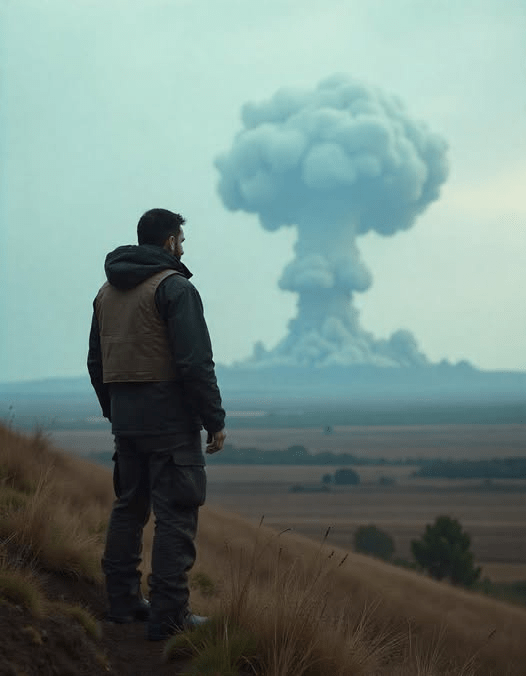
The Nuclear Threat. What to do?
Introduction
Nowadays, the possibility of a nuclear attack, although statistically low, remains a real concern for many. Rising geopolitical tensions, the proliferation of nuclear weapons and the memory of historical accidents make preparedness a priority for those who value survival.
This guide explores the measures needed to mitigate the effects of a nuclear crisis, from the immediate protection of health to long-term survival strategies.
PART I: The Anatomy of the Nuclear Threat
For a prepper, survival begins with an exhaustive understanding of the phenomenon. A nuclear incident — whether a civilian accident at a power plant or a military detonation — triggers a sequence of events that require distinct responses and rigorous planning.
1\. Physical and Thermal Destruction: The Immediate Impact
The detonation generates a devastating shock wave that annihilates buildings and infrastructure within a radius that depends on the weapon's yield. Immediately afterwards comes the thermal flash: an emission of light and heat so intense that it causes severe burns to people at a considerable distance from the epicentre. These mass fires can turn into firestorms, often being the main cause of immediate mortality even before the radiation.
2\. Ionising Radiation and the Danger of “Fallout”
The explosion releases initial gamma and neutron radiation. However, for those outside the blast radius, the persistent danger is fallout (radioactive rain): contaminated particles of dust, soil and ash that are thrown into the atmosphere and deposited by the wind. This radiation causes acute illness (radiation sickness) and long-term genetic damage. Monitoring with a Geiger counter becomes the only reliable diagnostic tool here.
3\. Collapse of Public Services and Infrastructure
3.1 – Nuclear Accident Scenario (Continuity of the State)
In an accident (such as a failure at a power plant), the national infrastructure remains, to a large extent, intact. The challenge here is overload, not destruction.
- Electrical Grid and Communications: They remain functional. The State uses the mass media (RTP, radio, SMS alerts) to coordinate the population. Electricity allows water filtration and purification systems to continue operating.
- Relief Logistics: The security and civil protection forces (Firefighters, GNR, INEM) act according to pre-established plans. External (international) aid is possible and likely.
- Supply: Food distribution chains may suffer occasional interruptions due to contamination of routes, but the market system continues to exist.
3.2 – Nuclear War Scenario (The EMP Phenomenon and Total Collapse)
In a nuclear war, the infrastructure is not just damaged; it can be functionally “evaporated” through the Electromagnetic Pulse (EMP). A high-altitude detonation generates an electromagnetic discharge that fries semiconductor circuits within a radius of hundreds of kilometres.
- Electronic Paralysis: Mobile phones, computers, tablets and most modern vehicles (with electronic control units – ECU) stop working instantly. The “system” becomes mute and blind.
- Water and Sanitation: Water pumping and treatment plants depend on electronic systems and a stable electrical grid. Without them, taps run dry within a few hours. Waste and sewage management collapses, raising the risk of epidemics.
- Energy: The national electrical grid would suffer irreparable damage to its high-voltage transformers, which take months or years to replace. Dependence on the grid becomes a trap.
- The Institutional Vacuum: Without communications and without mobility (vehicles at a standstill), the central administration loses the capacity for command and control. The individual ceases to be an assisted citizen and becomes an isolated survivor, depending exclusively on what they have stored and on the knowledge they possess.
3.3 – Preparedness as a Response to the Vacuum
At this point, the prepper understands that their technological redundancy is vital. Having equipment protected in Faraday Cages, owning old vehicles (without complex electronics) or manual/mechanical water pumping systems ceases to be a “hobby” and becomes the only way to maintain a minimum standard of living while the rest of the world returns to the pre-industrial era.
4\. Population Displacement: The Exodus and the Collective Response
Unlike science fiction scenarios, the displacement of people after a disaster does not necessarily have to be chaotic. In cultures such as the Portuguese, there is a strong tendency towards community solidarity and family support.
- Organised Movement: People will tend to abandon contaminated or dangerous areas towards rural areas or relatives' homes (“refuge in the village”). This movement, if well coordinated by the authorities or guided by collective common sense, can be orderly, but it will generate a humanitarian logistics crisis: a lack of shelter, fuel and food for those in transit.
- Reception Areas: The pressure on small localities outside the impact radius will be immense, requiring the prepper in these areas to have plans not only for themselves, but for managing resources in the face of the arrival of others.
5\. Stress Management and Social Order
Although panic is a natural reaction, social disorder (looting or violence) usually occurs only when there is a perception of total abandonment by the authorities or a critical shortage of essential goods.
- Panic vs. Resilience: Fear is inevitable, but mental preparation allows the individual to make rational decisions. The maintenance of social order depends on how quickly local communities organise themselves to ensure security and the distribution of resources.
- The Cultural Difference: The focus must be on cooperation. In Portugal, the neighbourhood network and local institutions (firefighters, parish councils) are the pillars that can prevent the collapse of civil coexistence.
6\. Impact on Public Health and Sanitation
The combination of the physically injured, the burned and people exposed to radiation will create a volume of patients that no hospital can handle. In addition, the breakdown in sanitation systems and the difficulty in managing waste can lead to the emergence of secondary diseases (cholera, infections), making hygiene and preventive medicine in the shelter vital points of survival.
7\. Environmental Impact and Long-Term Food Security
The contamination of soil and aquifers by radioactive isotopes (such as Caesium-137) will have persistent effects. Entire ecosystems may suffer mutations or partial collapses. Agriculture in the affected areas will be unviable for years, which makes seed storage and knowledge of cultivation techniques in a protected environment (sealed greenhouses) a critical advantage for self-sufficiency.
I. Understanding the Nuclear Threat
To prepare adequately, it is essential to understand what a nuclear attack involves and its consequences. A nuclear attack can result from a military escalation, terrorism, or a miscalculation. The main consequences include:
1. Physical Destruction: The explosion generates a devastating shock wave that can destroy buildings and infrastructure and cause large-scale deaths. The intensity of the destruction depends on the bomb's yield and the proximity to the epicentre.
2. Radiation: The explosion releases ionising radiation, which can cause acute radiation sickness in directly exposed people, as well as increasing the risk of cancer and other diseases in the long term.
3. Burns and Injuries: The extreme temperature of the thermal flash can cause severe burns to people at a considerable distance from the epicentre. The burns can be fatal and lead to significant medical complications.
4. Impact on Public Health: The combination of the injured, people exposed to radiation and the need for medical assistance creates a public health crisis. Hospitals may be insufficient to deal with the volume of casualties.
5. Population Displacement: The destruction of urban areas can lead to a large displacement of people. People may have to evacuate contaminated or dangerous areas, resulting in a humanitarian crisis.
6. Collapse of Public Services: Vital infrastructure, such as water, electricity and communications, can be severely damaged or destroyed, hampering the emergency response and rescue efforts.
7. Panic and Social Disorder: The attack can generate panic, fear and disorder among survivors. This can lead to looting, violence and a collapse of social order.
8. Environmental Impact: In addition to the immediate destruction, the contamination of soil and water by radiation can have long-term effects on the local environment and on the health of ecosystems.
II. Pre-Impact Preparation
A. Building a Shelter
1\. Shelter Location
Identifying a safe location for building a bunker is essential. Ideally, it should be built or placed in an underground area, away from windows and with thick walls of dense material, such as concrete or stone, and it involves considering several factors. Here are some guidelines to help find a suitable location:
1. Distance from the Epicentre:
- Look for a location that is at least 30 to 40 km from the centre of any city or potential target. This can reduce exposure to radiation and the impact of the explosion.
2. Altitude and Topography:
- Opt for locations in elevated areas or with topography that can protect the bunker against flooding and landslides after an explosion.
3. Soil and Foundation:
- Carry out a geotechnical study before investing in the location; ensure that the soil is stable, firm, capable of supporting the weight of the bunker and resisting tremors and explosions.
4. Access:
- Choose a location with good accessibility, such as a track or road, to facilitate the arrival of materials and equipment.
5. **Groundwater Level Analysis**:
- Ensure that the site has no groundwater, or that the groundwater depth is significant, in order to avoid flooding of the bunker.
6. Natural Radiation:
- Avoid locating the bunker in areas with high rates of natural radiation, such as near uranium mines or other radiation deposits.
7. Existing Structure:
- Consider the possibility of reusing an existing structure, such as a cave or a tunnel, that can be adapted to serve as a bunker.
8. Natural Cover:
- Look for locations with natural cover, such as forests or mountains, that can provide protection against radiation and other dangers.
9. Safety Zone:
- Check whether the location is within the safety zone of any nuclear facility or other sources of potential danger.
10. Regulations and Permits:
The construction of anti-nuclear bunkers in Portugal is not legislated; however, there are some situations that you should take into consideration:
- General Regulation of Urban Buildings – RGEU
- Decree-Law no. 38382 Articles 29, 77, 78 and 80
- Urban Planning Code
- The construction of any type of structure must comply with the Urban Planning Code. This includes compliance with municipal master plans and land use regulations. To this end, you should consult the local authority for the area of implementation.
- Construction Licensing:
- It will be necessary to obtain a building permit from the local town hall. The process includes submitting an architectural and technical project, which must be approved by the competent authorities.
- Environmental Impact Assessment (EIA):
- If the bunker could have a significant impact on the environment, an Environmental Impact Assessment may be required. This generally applies to larger-scale projects or those in sensitive areas.
- Cultural Heritage Regulations:
- If the land is located in an area of historical or cultural value, there may be additional restrictions on construction, and it will be necessary to consult the Directorate-General for Cultural Heritage.
- Water Resources Regime:
- If construction is planned in areas with bodies of water or in the proximity of water tables, it is necessary to comply with the legislation on the use and protection of water resources
11. Blending with the Terrain:
- Look for locations where the bunker can be integrated into the terrain, reducing visibility and exposure to possible threats.
2\. Structure and Resources
Building a resistant shelter that can withstand the initial explosion and the radiation is fundamental. This includes:
- Quick access to food and water.
- Ventilation systems: To filter out radiation.
- Radiation protection areas: With materials that absorb gamma rays and particles.
B. Stockpiling Supplies
1\. Food
Storing non-perishable food that lasts for years is vital. Ideally, you should have a combination of:
- Grains (rice, beans).
- Canned goods (vegetables, meat).
- Dehydrated food.
2\. Water
Water is a resource that can run out quickly in catastrophe situations. Having a water tank or a rainwater collection system is essential. It is advisable to store at least one gallon of water per person, per day, for a period of at least three months.
3\. Medicines and First Aid
A good first aid kit, essential medicines and items for long-term health care should not be neglected. This includes:
- Antibiotics, painkillers and specific medications.
- Basic first aid equipment.
- Supplies for chronic illnesses.
III. Preparation During the Impact
A. Immediate Protection
1\. Safe Shelter
The moment of impact is critical. Upon learning of an imminent nuclear threat, go immediately to your shelter. Close doors and windows to minimise the entry of radioactive dust.
2\. Avoiding Radiation Exposure
Wearing thick clothing and covering the skin can help protect against the initial exposure. Barricades of furniture and other indoor items are useful for creating additional layers of protection.
B. Radiation Monitoring
Investing in a Geiger counter is crucial for monitoring radiation levels. This will allow you to know when the outside area becomes safe to go out.
IV. Surviving in the Long Term
A. Self-Sufficiency
Preparing for a long stay requires planning for self-sufficiency. This includes:
1. Growing Food
Studying indoor gardening techniques or hydroponic cultivation is essential. Growing fast-growing, highly nutritious vegetables will ensure a continuous supply of food.
2. Water Collection
Having space to collect and purify water is crucial. Filtration and purification systems must be installed to guarantee drinking water.
3. Sustainable Energy
Consider alternative energy sources, such as solar panels, bio-generators or gasifiers, in order to ensure that you have electricity in the long term.
V. Social and Psychological Life
A. Maintaining Morale
Survival is not just physical. The psychological consequences of a nuclear attack can be significant:
1. Recreational Activities: Creating activities and games to pass the time can help preserve morale.
2. Social Connections: The human being is a social being and, even though one values their privacy and moments of quiet, the fact is that without other people to interact with, one becomes depressed.
B. Mental Preparation
Working on mental resilience and practising stress management techniques is vital. This can include:
1. Relaxation exercises: Breathing and meditation techniques help reduce anxiety.
2. Contingency Plans: Having a clear plan on what to do in various situations can boost confidence.
VI. Preparation for the Post-Impact Period
A. Damage Assessment
After the impact and the decrease in radiation levels, assessing the damage and the safety of your surroundings is vital. This includes:
1. Monitoring Radiation Levels: Continue to use the Geiger counter.
2. Resource Analysis: Assess what is left and what needs to be replenished.
B. Reintegration into Society
As external conditions stabilise, reintroduction into society may be necessary. This requires planning:
1. Connecting with Others: Seek out other survivors and establish contact with groups.
2. Risk Assessment: Be aware of what has changed, such as the scarcity of resources or new threats.
VII. Conclusion
Preparing for a nuclear attack will require a broad spectrum of considerations, from the construction and supplying of a shelter to maintaining mental and social health during extended periods of isolation. Preppers should view this preparation as an investment not only in their physical survival, but also in their quality of life under adverse conditions. By implementing these strategies, it is possible to maximise the probability of survival and adaptation in times of extreme crisis. After all, human resilience is just as important as the resources we store.